
Master's and Ph.D. from Tokyo Institute of Technology, Graduate School of Science and Engineering, Earth and Planetary Sciences. Expert in question generation methodology.
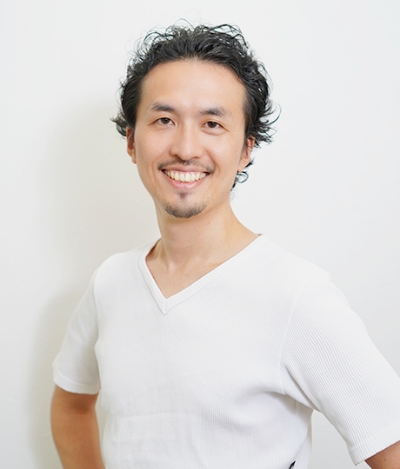
During his doctoral studies at the Tokyo Institute of Technology (now Institute of Science Tokyo), he specialized in theoretical astrophysics and planetary formation. As part of a Japanese government–funded research project, he conducted exoplanet and planetary exploration research using the Subaru Telescope in Hawai‘i. Working across physics, astronomy, life sciences, and computational science, his research centered on a fundamental human question:
“Where do we come from?” —approached through both theory and data, at a civilizational scale.
He later left academia to enter environments where decisions shape reality. At Morgan Stanley’s Investment Banking Division, he worked on IPOs, capital raising, and M&A, operating in contexts where decisions involving hundreds of billions to trillions of dollars are made. There, he came to understand—viscerally—that outcomes are often determined not by logic alone, but by how questions themselves are framed.
He then joined ispace, a space startup that went public in 2023, serving as Chief Mission Officer and leading Japan’s first private lunar mission. From mission design and public–private partnerships to fundraising exceeding $100 million, business development, and organizational architecture, he worked across the full system. In a world where uncertainty is the default, he confronted daily questions such as:
“What do we trust? “ “Where do we place our bets?”
Not as theory. Not as imagination. But as decisions that would shape the future.
Today, he is Founder & Co-CEO of wov (Kamakura) and Co-Founder & Co-CEO of Philosophy Technologies (Silicon Valley), building ventures that translate philosophical thinking into real-world practice. He also serves as Philosophy Advisor at Zahren Capital (New York) and as a mentor for Plug and Play Japan and JETRO’s J-StarX global expansion program, working closely with founders and executives seeking to change the world.
Daishi’s navigation does not begin by organizing thinking within familiar frameworks. It begins by asking whether those frameworks are valid at all. Having moved between research labs contemplating the origin of the universe, the front lines of capital markets, and the creation of entirely new industries, he explores questions that raise spatial scale, temporal scale, and underlying assumptions—together with leaders. This enables executives to re-locate their decisions within historical, civilizational, and even cosmic perspectives, and to reconsider not only what they decide, but where they stand and where they are heading.
A sommelier and wine importer who sharpens all five senses to focus on subtle changes and differences, translating sensations into language.
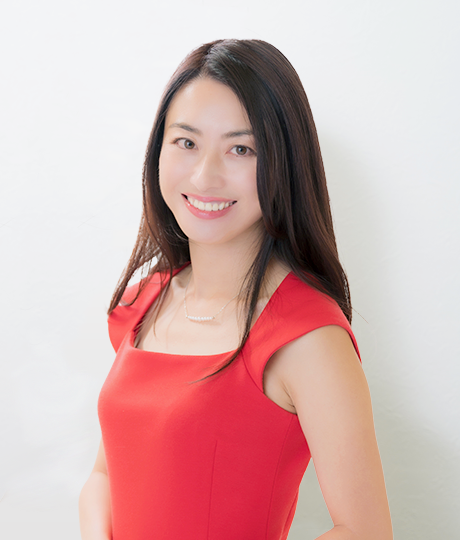
While studying at Waseda University, Yuko Konno developed her philosophical foundations under the guidance of Professor Emeritus Kazuhiko Yamaki, a world-renowned authority in medieval philosophy, and Professor Yoshiaki Yanai. From an early stage, she cultivated a deep interest in how human beings perceive the world, assign meaning, and make judgments—an inquiry that continues to inform her work today.
After graduating, she gained frontline experience in sales and business development at Takeda Pharmaceutical Company and Recruit Career, where she closely observed how decisions within organizations and markets are shaped not only by rational analysis, but also by unspoken assumptions, values, and cognitive frameworks.
In 2009, Yuko founded Almundo Inc., which she has led for over 16 years as a wine importing and branding company. Through collaborations with NTT DOCOMO, Yamaha, Square Enix, as well as embassies, municipalities, and other leading institutions, she developed distinctive branding and business models that go beyond product distribution. Using wine as a medium, she integrates culture, narrative, and time into experiential value creation—redefining why people choose in mature and highly competitive markets.
Central to her expertise is the exploration of human perception and the process of translating sensory experience into language and judgment. Drawing from wine tasting as a disciplined practice of perception, Yuko applies philosophical thinking to understand how intangible value is recognized, articulated, and ultimately transformed into decision-making and action. This approach has informed her work in business development, strategy, and executive dialogue.
Having lived in six countries across four languages, Yuko brings a deeply multicultural perspective, combined with an original methodology that moves fluidly between thinking and the five senses. This integrative approach enables her to support decision-making that is neither purely analytical nor purely intuitive, but grounded in a deeper understanding of human judgment.
Since relocating to the United States in 2021, Yuko has been based in Silicon Valley, where she participates in the management and strategic initiatives of multiple companies in Japan and the U.S. She is the author of How to Communicate Invisible Value (Cross Media Publishing, 2025).
Within Philosophy Quest, Yuko serves as a navigator who explores the tensions between culture and management, sensibility and logic, short-term action and long-term meaning—guiding leaders to reconstruct their own decision-making frameworks and translate reflection into purposeful execution.
Professor of Philosophy at University of Hawaii. Associate Director of Philosophy and Educational Ethics.
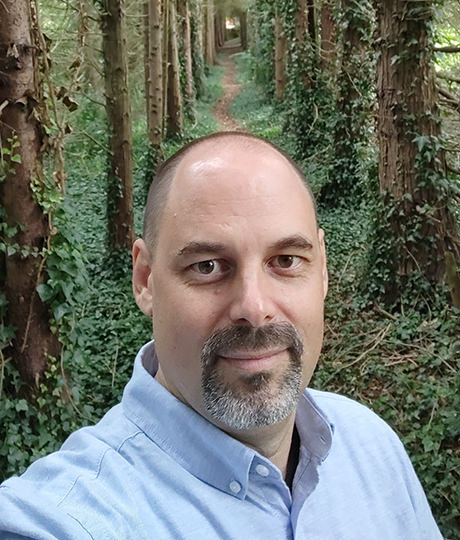
Ben is a Specialist in Philosophy at the University of Hawaiʻi at Mānoa and Director of Philosophy and Ethics in Education at the Uehiro Academy. He earned his PhD in Comparative Philosophy at the University of Hawaiʻi, where he developed a philosophical approach that moves beyond Western-centric frameworks to explore how humans think, learn, and make decisions across cultures and contexts.
His areas of expertise include philosophy of disability, comparative philosophy, and philosophy for children (P4C). He is widely recognized for his commitment to bringing voices traditionally excluded from philosophical discourse into the center of inquiry. In Hawaiʻi, he has led Philosopher-in-Residence projects in public schools and has taught and mentored both educators and students across public elementary schools, middle schools, high schools, and the University of Hawaiʻi.
What defines his navigation is his ability to transform differences—of background, perspective, and ability—into sources of deeper understanding rather than division. In leadership and organizational contexts, he excels at guiding dialogue in moments of tension and complexity, helping decision-makers uncover assumptions, broaden perspectives, and elevate the quality of the community of inquiry.
Vice President of the National Public Philosophy Network. Pioneer of philosophical counseling.
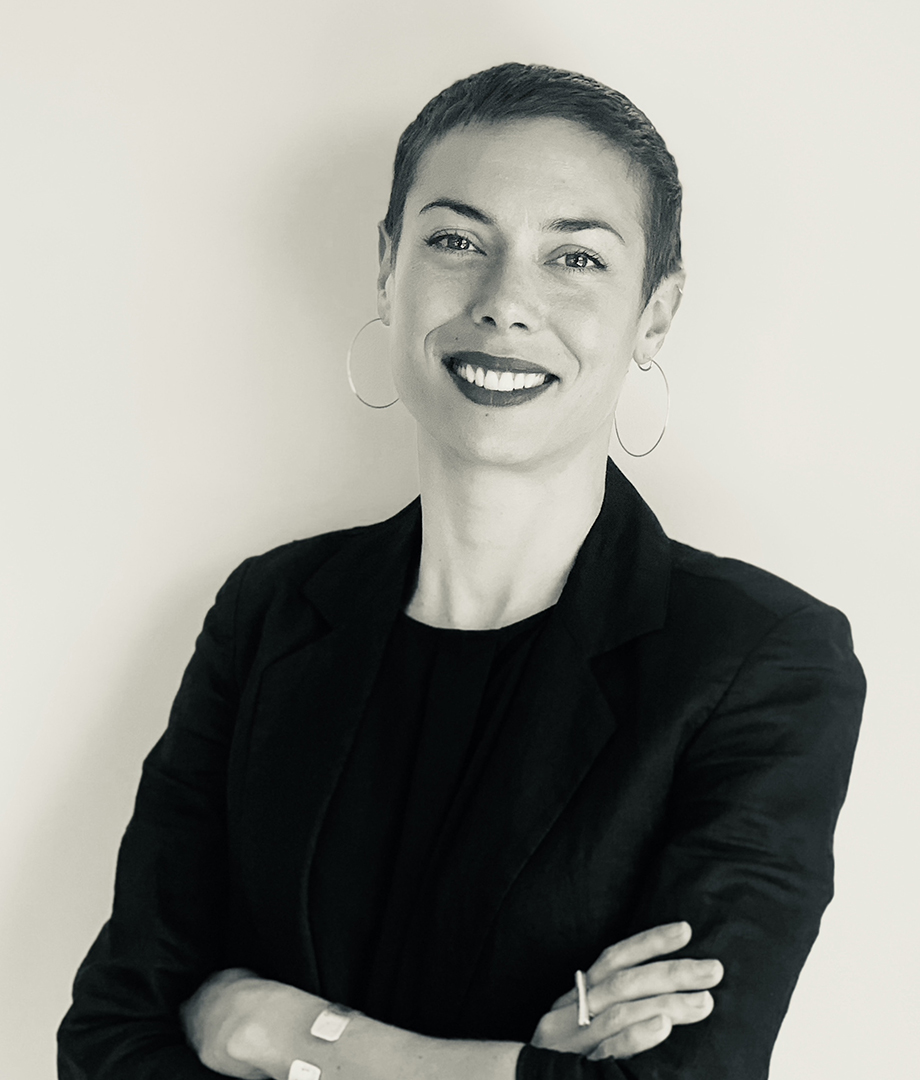
Jeanne is a deeply and broadly trained humanities scholar whose education spans literature, visual arts, and the history of philosophy, allowing her to move fluently across disciplines and intellectual traditions. She completed her PhD at Universite Paris 1 Pantheon-Sorbonne, focusing on the pathologies of willpower from both philosophical and psychological perspectives.
She has taught philosophy in the United States for over fifteen years, including appointments at NYU and Fordham in New York, and most recently at the University of California, Santa Cruz – while actively expanding philosophical education beyond the academy through initiatives in places such as Rikers Island and San Quentin.
Jeanne currently serves as Vice President of the Public Philosophy Network and is slated to become its President in 2026. In this role, she helps shape national and international initiatives that bring philosophical inquiry into conversation with civic life, social change, and public debate. From 2023 to 2024, she was Director of the Center for Public Philosophy at UC Santa Cruz, where she led community-centered ethics programs and partnerships across academia, the arts, and civil society.
At UCSC’s Crown College, Jeanne is Academic Coordinator for the core course on the ethical and societal implications of emerging technologies, guiding students through questions about AI, justice, power, and responsibility. She has helped launch the first Tech Ethics Bowl in the Bay Area and continues to direct the Santa Cruz Night of Ideas, an annual public forum bringing artists, scientists, activists, and scholars into dialogue.
Her research explores ethics, feminist theory, aesthetics and the philosophy of technology, with a current focus on how AI reshapes intimacy, trust, and human connection. Alongside her academic work, Jeanne runs a philosophical counseling practice, helping individuals and leaders think more creatively about how they live and decide.
In her sessions, Jeanne draws on dialogical inquiry and phenomenological attention to lived experience, using close questioning, conceptual clarification, and reflective listening to help clients articulate the assumptions, values, and narratives shaping their lives. She works collaboratively to reframe problems, cultivate self-understanding, and open new possibilities for agency and meaning.
Lecturer in Philosophy and Law at UC Santa Cruz.
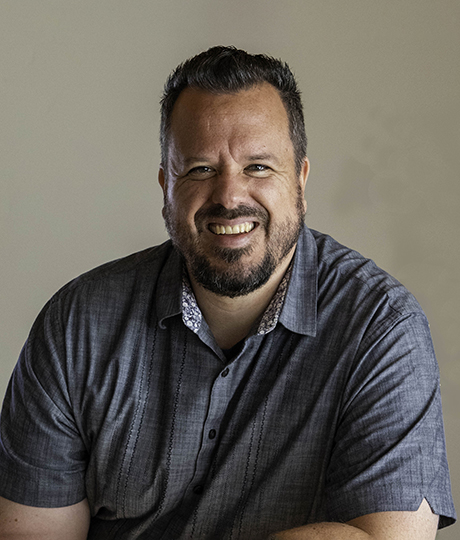
Kyle is a practical thinking navigator working at the intersection of law, ethics, and technology, focused on strengthening the quality of judgment in complex decision-making environments. He holds a Ph.D. in Philosophy from the University of California, Santa Cruz, and currently teaches in the areas of philosophy and law at UCSC, where his education and research center on ethical, legal, and technological dimensions of decision-making. His work goes beyond abstract theory, specializing instead in a practice-oriented philosophy that asks how real-world judgments are ethically and legally formed within concrete institutional and technological contexts.
Before his work as a philosopher, Kyle earned a Juris Doctor (J.D.) from UC Berkeley School of Law and practiced at the Silicon Valley law firm Heller Ehrman LLP, where he worked on intellectual property litigation. In that setting, he experienced firsthand how rights, responsibilities, and risks collide around technology companies, developing a grounded understanding of how legal judgment and ethical judgment intersect under real-world pressure.
Since then, his work has focused on ethics, philosophy of law, and applied philosophy, engaging the social and ethical implications of technology through education and dialogue. He has designed and facilitated spaces in which questions around artificial intelligence, intellectual property, responsibility, accountability, and norm formation are explored not only by specialists, but together with participants from diverse backgrounds and perspectives.
Kyle’s navigation does not treat ethics or technology as matters of abstract norms or compliance alone. Instead, he clarifies what is truly at stake in actual decision-making situations by surfacing underlying assumptions, implicit value judgments, and risks that often remain unarticulated. By making the structure of judgment itself visible, he enables leaders and organizations to think more clearly about what they are deciding, on what basis, and with what responsibilities.
At Philosophy Quest, he supports executives and organizations facing decisions where law, ethics, and technology intersect, helping them move beyond short-term answers or prevailing conventions toward decision-making that is sustainable, explainable, and grounded in carefully examined judgment—even amid rapidly evolving technological environments.